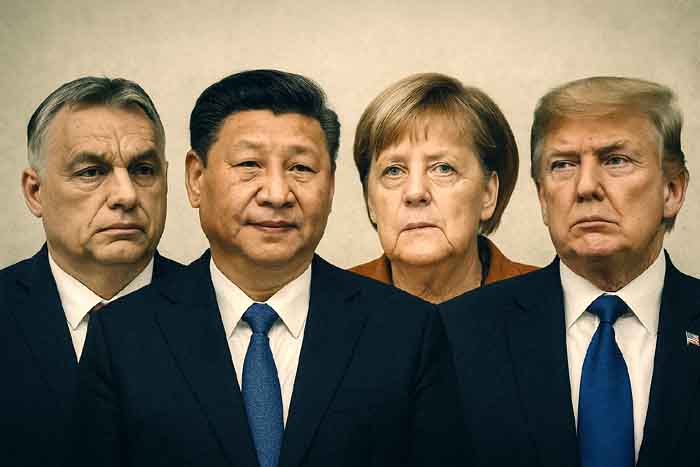
The COVID-19 pandemic, caused by the novel coronavirus first identified in China, has thrust public health to the forefront of national agendas worldwide. Lockdowns and social distancing have become universal tools to combat the spread of the virus. In exercising emergency powers, governments have revealed not just their pandemic responses but also the underlying motivations guiding their policy choices. This global crisis is also illuminating the social and political fabric of our time.
Billionaire Philanthropy and Systemic Weakness
Notable business leaders—such as Bill Gates, Jack Ma, Giorgio Armani, and Mark Zuckerberg—have donated vast sums to aid pandemic responses. While such private philanthropy is vital in developing nations, where governments also wrestle with hunger and poverty, it is troubling to see developed nations relying on similar support.
The pandemic has exposed significant vulnerabilities in the public health infrastructure of wealthy countries. That even advanced economies must turn to private donors during a health crisis suggests deeper issues in governance. These nations had the resources and time to fortify their systems, yet they prioritized other interests during stable periods.
Public Health Neglect in Neoliberal Economies
A robust public health system is expected to prevent disease transmission and treat the infected. However, many neoliberal economies failed to invest adequately in healthcare during times of peace. This negligence has resulted in the chaos we observe today: an overburdened system now propped up by private donations, while governments congratulate themselves on underwhelming performances.
 Power Consolidation Under the Guise of Emergency
Crises often offer opportunities for rulers to expand their authority. In Hungary, for example, the government suspended by-elections and granted the Prime Minister unchecked powers to rule by decree, citing the pandemic as justification, with no clear end date to these measures.
China presents another case of authoritarianism under strain. Zeynep Tufekci, a sociologist at the University of North Carolina, compared China’s delayed response to COVID-19 to the Great Chinese Famine under Mao. Reports suggest that Wuhan officials may have withheld critical information from the central government, fearing repercussions. If true, this delay significantly worsened the global outbreak and underscores the importance of transparency and accountability in governance.
In contrast, South Korea and the Indian state of Kerala demonstrated that openness and responsibility can lead to more effective crisis management. Both regions implemented data-driven responses and earned global praise for containing the virus early.
The Illusion of Control in Democratic Settings
Governments must remain receptive to public discourse and scientific counsel. However, the U.S. response has highlighted tensions between expertise and authority. President Donald Trump’s earlier decisions—such as withdrawing from the Paris Agreement, cutting science funding, and disbanding the National Security Council’s global health unit—reflect a disregard for long-term preparedness.
When such decisions backfire during emergencies, leaders often resort to optics, creating the illusion of action. This strategy deflects criticism without addressing the structural deficiencies exposed by the crisis.
Two Emerging Trends in Global Politics
The pandemic has revealed two notable trends in international relations:
- Mutual Admiration Among Governments: Across the world, national media outlets have celebrated their governments’ responses, often by citing praise from foreign media. This circular validation distracts from domestic governance failures by redirecting public attention outward.
- Scapegoating of Global Institutions: The World Health Organization (WHO) became a prominent target during the pandemic. The degree of criticism it received—particularly from national governments—marked a new low in international diplomacy. This blame game is unprecedented in recent history and raises questions about the future of global cooperation.
Reimagining Governance for the Future
COVID-19 has laid bare the fragility and unpreparedness of existing governance systems. As a global society, we must critically reevaluate the foundations of governance to ensure resilience against future crises. Accountability, transparency, and the inclusion of scientific expertise must become central tenets of policy-making, not optional considerations.
Further Reading:
- Applebaum, A. (2020, March 23). The People in Change See an Opportunity. Retrieved April 16, 2020, from The Atlantic: https://www.theatlantic.com/ideas/archive/2020/03/when-disease-comes-leaders-grab-more-power/608560/
- Harvey, D. (2020, March). Anti-Capitalist Politics in the Time of COVID-19. Retrieved April 16, 2020, from Jacobinmag: https://jacobinmag.com/2020/03/david-harvey-coronavirus-political-economy-disruptions?__cf_chl_jschl_tk__=5ef9cb4135123ee9693dd09ba17c101cb3e54c3c-1587881452-0-AesH_Sz0R2g91YVy1mWRVo3DYM_54A1g3es9QDCiQCi7tyd5uvAbnjuockKsI66wb2J5U8CGd3V6-o_2iNFIuhPE7EyQ2H3
- Reich, R. (2020, March 22). The Dangers of relying on Philanthropists. Retrieved April 16, 2020, from Wired: https://www.wired.com/story/opinion-the-dangers-of-relying-on-philanthropists-during-pandemics/
- Tufekci, Z. (2020, February 22). How the Corona virus Revealed Authoritarianism’s Fatal Flaw. Retrieved April 16, 2020, from The Atlantic: https://www.theatlantic.com/technology/archive/2020/02/coronavirus-and-blindness-authoritarianism/606922/
- Tufekci, Z. (2020, March 15). Trump, Truth, and the Mishandling of the Corona virus Crisis. Retrieved April 16, 2020, from Newyorker.com: https://www.newyorker.com/news/daily-comment/trump-truth-and-the-mishandling-of-the-coronavirus-crisis
Note: This article was originally written on April 25, 2020, during the height of the COVID-19 pandemic. Political developments occurring after this date are not reflected in the analysis.
